
How Chatbots Work: A Complete Guide to AI Chatbots in 2026
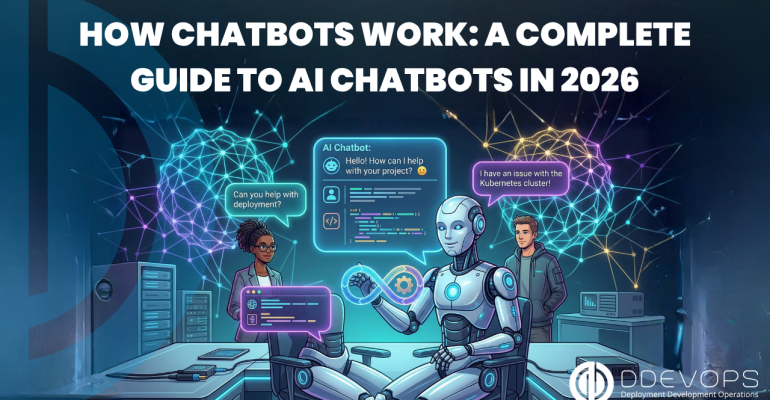
How Chatbots Work: A Complete Guide to AI Chatbots in 2026
 hamna Siddiqui
Discover how chatbots work, from AI-driven conversations to automated responses, and learn how they transform user interactions.
Table of Contents
- Introduction
- How Chatbots Work
- Types of Chatbots
- Rule-Based Chatbots
- AI-Powered Chatbots
- Core Components of Chatbots
- Natural Language Processing (NLP)
- Machine Learning (ML)
- Backend Integration
- How Chatbots Process User Input
- Use Cases of Chatbots
- Customer Support
- E-commerce
- Healthcare
- Education
- Challenges in Chatbot Development
- Future of Chatbots
- Conclusion
Introduction
Chatbots are computer programs that talk to people like a human would. They can have conversations with us through text or voice. We see chatbots in customer service, social media, and things like Siri and Alexa. The main thing a chatbot does is give people answers to what they want to know. This helps people like using chatbots and feel happy with the experience. Chatbots are really good, at helping us get what we need quickly
How Chatbots Work
Chatbots are a part of how we talk to each other now. They give us answers and help when we need it. This document is going to look at how chatbots work. It will talk about what makes up a chatbot and the kinds of chatbots that are out there. It will also talk about the technology that makes chatbots work. When we understand how chatbots work, we can see why they are so important for making things better for people who use them. Chatbots are really good at helping us. We can learn a lot from them by looking at how they work and what makes them tick.
Types of Chatbots
Rule-Based Chatbots
Rule-based chatbots work with rules and scripts. They use a list of guidelines to reply to what users type. These chatbots are not good at understanding the situation. Can only deal with certain questions. They are good for jobs, like giving answers to common questions or helping users step by step.
AI-Powered Chatbots
AI-powered chatbots use machine learning and natural language processing to understand what people are asking for. They get better at responding to questions because they learn from talking to people. AI-powered chatbots can have conversations with people and give them experiences that are just for them based on what they know about the person. AI-powered chatbots do this by looking at the information they have about the person.
Core Components of Chatbots
Natural Language Processing (NLP)
NLP is a part of chatbots that use AI. It helps the chatbot get what a person is saying. NLP does a thing: * Tokenization: It splits sentences into single words or phrases. * Entity Recognition: This information is important because it tells us about things like the name of a person or a particular date. * Sentiment Analysis: It figures out how a person is feeling from their message. NLP helps chatbots understand people better. It makes chatbots more useful.
Machine Learning (ML)
- → Machine learning helps chatbots get better over time.
- → They look at conversations to find patterns.
- → This helps them change how they respond to users.
- → Chatbots can then give accurate answers to what users ask.
- → It also helps them give answers that are more relevant.
- → Machine learning makes chatbots smarter by analyzing past interactions.
- → This way chatbots provide answers.
- → They adjust their responses based on what they learned.
- → Chatbots use machine learning to improve their performance.
- → It helps them serve users better.
Backend Integration
Chatbots need to work with systems in the background like databases and APIs so they can do their job properly. This helps chatbots get the information, handle transactions, and give users the most current answers. Chatbots really need this integration to work well and provide responses, to users because it lets chatbots access the information they need in real time.
How Chatbots Process User Input
The way chatbots deal with what users say can be broken down into steps: User Input: The user sends a message to the chatbot through a place where they can chat. Input Processing: The chatbot looks at what the user says to understand what the user wants and to find the things in the message. Response Generation: The chatbot makes a response based on what it understood from the user. Output Delivery: The chatbot sends its response back, to the user through the place where they can chat
Use Cases of Chatbots
Customer Support
Chatbots are really helpful when it comes to customer support. They can answer questions, figure out what is going wrong, and tell people about products and services. The great thing about chatbots is that they can work all the time every day of the week. This means people do not have to wait long to get help, which makes them happy, with the service they get from chatbots and the people who use them.
E-commerce
In shopping, chatbots help people find things they want to buy, complete their orders, and give them suggestions that are just for them. Chatbots make shopping by walking people through the steps to buy something. They assist people with things, like finding products and processing orders, which is what chatbots do in online shopping
Healthcare
Chatbots in healthcare are really helpful for patients. They can assist patients with things like scheduling appointments. Remembering to take their medication. Chatbots in healthcare also provide patients with information about their health. This means that people who work in healthcare can spend time taking care of patients. Chatbots in healthcare can take care of things, like paperwork and other tasks that take up a lot of time. This way healthcare professionals can focus on giving patients the care possible.
Education
In schools chatbots are like teachers on the computer. They help students with their school work. Give them answers right away. The education sector can really benefit from chatbots. Chatbots can also help with things like signing up for classes and making schedules for students. This makes life easier for students and teachers in the education sector.
Challenges in Chatbot Development
- Chatbot development has some problems.
- Understanding the situation is hard for chatbots. They have a timekeeper tracking of what is being talked about, especially when the conversation is complicated.
- Sometimes people ask questions in ways. This makes it hard for chatbots to know what people really want.
- People expect chatbot development to be like talking to a person. Chatbot development is not that easy to do.
Future of Chatbots
The future of chatbots is looking really good. New developments, in intelligence and natural language processing are making it possible for chatbots to have more advanced conversations. As technology gets better chatbots will be able to understand us more and answer our tough questions. They will also be able to give us experiences, which is pretty cool. The future of chatbots and artificial intelligence is going to be exciting to see. Chatbots will keep getting better and better.
Concluding Note:
Chatbots are changing the way we talk to technology. They give us simple solutions for lots of things. When we know how chatbots work, we can see how they make things better for people who use them. Chatbots are going to be a part of our lives because technologies like artificial intelligence and natural language processing are getting better. This means chatbots will help us talk to each other and do things easily. Chatbots will keep getting better and better.
Reference links:
For more coding series:
Power of Microservices Observability
No-Code & Low-Code
Learning to Code: How to Think Like a Programmer
Written By Faheem Ahmed